Commercial asphalt paving is an important investment for business owners, property managers, apartment communities, retail centers, and industrial facilities. A smooth, properly constructed parking lot improves access, supports safer vehicle movement, and creates a more professional first impression. However, before starting a paving project, most property owners want to know one thing: how much will it cost?
If you are researching commercial asphalt paving costs in San Leandro, CA, the answer depends on several factors, including the size of the paved area, existing pavement conditions, asphalt thickness, site preparation, drainage, and the type of work required. Consequently, two commercial properties with similar parking lot sizes can receive very different estimates.
For the 2026–2027 planning period, Bay Area property owners should compare the complete scope of work rather than focus only on the price per square foot. Furthermore, choosing the right paving solution can help control upfront expenses while supporting long-term pavement performance.
Jobco Paving provides paving-related services for property owners who need practical solutions for driveways, commercial surfaces, hardscapes, and pavement maintenance. Therefore, understanding the available options can help you prepare a realistic budget and determine which improvements make the most sense for your property.
How Much Does Commercial Asphalt Paving Cost in San Leandro, CA?
Commercial asphalt paving prices vary according to the project’s requirements. For preliminary budgeting in the Bay Area, the following ranges provide a useful starting point. These are general planning estimates, not guaranteed Jobco Paving prices or a substitute for a property-specific inspection.
| Commercial paving service | Estimated planning cost per square foot | Typical scope |
| Asphalt overlay | 3.50–7.50 | New asphalt layer over suitable existing pavement |
| Mill and overlay | 4.50–8.00 | Removal of a portion of the old surface followed by new asphalt |
| New asphalt pavement installation | 4.00–8.00 | New paved area with preparation appropriate to the site |
| Full-depth reconstruction | 7.00–15.00+ | Removal and replacement of deteriorated pavement and necessary base work |
| Sealcoating and surface protection | 0.20–0.45 | Protective coating on suitable existing asphalt |
These ranges are broad because project specifications and local conditions can change the final price. Moreover, some estimates exclude drainage upgrades, concrete curbs, striping, accessibility improvements, demolition, or permit-related expenses. Therefore, always confirm what each proposal includes before comparing bids. Bay Area cost references and broader 2026 commercial paving guides also show substantial differences between overlays and full reconstruction. <Cite refs={[“turn983538search12″,”turn983538search1″,”turn983538search4”]}/>
For example, an overlay may be suitable when the existing pavement remains structurally sound. However, if the underlying base has failed, installing a new layer without addressing the problem may only delay a more expensive repair.
Commercial Asphalt Paving Cost Examples for Different Project Sizes
Understanding the price per square foot is helpful. Nevertheless, property owners also need to know how that rate translates into a potential project budget.
The examples below use illustrative square footage and estimated installed costs. Actual proposals may fall outside these ranges depending on preparation, materials, labor, and site conditions.
| Project size | Overlay at 3.50–7.50/sq. ft. | Reconstruction at 7–15/sq. ft. |
| 5,000 sq. ft. | 17,500–37,500 | 35,000–75,000 |
| 10,000 sq. ft. | 35,000–75,000 | 70,000–150,000 |
| 20,000 sq. ft. | 70,000–150,000 | 140,000–300,000 |
| 50,000 sq. ft. | 175,000–375,000 | 350,000–750,000 |
These calculations multiply the example area by the stated unit-price range. They are not formal estimates and may not include every project expense.
For instance, a 10,000-square-foot parking lot that needs only an overlay may require substantially less investment than a lot of the same size that needs excavation, base replacement, and drainage improvements. Therefore, a site assessment is essential before establishing a final budget.
Additionally, larger projects may benefit from more efficient equipment use and material delivery. However, complicated layouts, limited access, phased construction, and heavy traffic requirements can offset those efficiencies.

What Factors Affect Commercial Asphalt Paving Prices?
Several important variables determine how much a commercial paving project will cost in San Leandro and the surrounding Bay Area.
1. Total pavement area
Naturally, larger projects require more asphalt, equipment time, and labor. However, the cost per square foot does not always increase proportionally with the project’s size. For example, mobilization expenses can be spread across a larger area on a substantial commercial site.
2. Existing pavement condition
The condition of the current surface is one of the most important cost factors. If the pavement has minor surface wear but remains structurally stable, an overlay may be practical. In contrast, widespread cracking, rutting, potholes, or base failure may require more extensive reconstruction.
Consequently, a contractor should evaluate the underlying conditions instead of recommending the same treatment for every property.
3. Asphalt thickness and traffic loads
Commercial parking lots experience different levels of use. For example, a small office parking area may experience mostly passenger vehicles, while a warehouse entrance may regularly support delivery trucks.
Therefore, the pavement design should account for expected traffic, loading conditions, soil characteristics, and applicable engineering requirements. Although thicker pavement can increase initial costs, the correct design is important for long-term performance.
4. Grading and drainage
Water can contribute to pavement deterioration when it collects on the surface or enters cracks and weakens the supporting layers. As a result, grading and drainage corrections may be necessary before new asphalt is installed.
Furthermore, drainage work can involve more than changing the surface slope. Depending on the site, it may require adjustments around catch basins, curbs, entrances, or adjacent paved areas.
5. Removal and disposal
When existing pavement must be removed, the estimate may include cutting, milling, excavation, hauling, and disposal or recycling. Consequently, a full replacement project generally costs more than an overlay that can be installed over a suitable existing surface.
6. Labor, equipment, and material delivery
The Bay Area has its own labor market, transportation requirements, and material logistics. Therefore, the distance to an asphalt plant, delivery scheduling, equipment access, and the size of the crew can affect the final estimate.
7. Striping and accessibility requirements
Commercial paving often involves more than the asphalt surface itself. Parking lines, directional markings, accessible parking spaces, ramps, signage, and pedestrian routes may also need attention.
Additionally, projects that alter existing layouts or site access may require further review to determine which local codes, permits, and accessibility requirements apply.
Asphalt Overlay vs. Full-Depth Reconstruction: Which Is More Cost-Effective?
Choosing between an overlay and reconstruction can make a significant difference to the total project budget. However, the least expensive option initially is not always the most economical over time.
An asphalt overlay adds a new layer to an existing pavement surface. Therefore, it can be a practical option when the base is stable and the existing pavement can support the proposed treatment. It may also reduce demolition requirements and shorten the construction period.
Full-depth reconstruction, on the other hand, involves removing deteriorated pavement and rebuilding the affected layers. Although this option usually requires a larger investment, it may be necessary when the existing pavement or base has widespread structural problems.
Consider these general differences:
- Choose an overlay when: The existing pavement is generally sound, damage is limited, and the site assessment supports resurfacing.
- Consider milling and overlay when: The surface needs partial removal to correct deterioration, unevenness, or elevation concerns.
- Consider reconstruction when: Base failure, severe deformation, extensive damage, or other conditions make resurfacing unsuitable.
Nevertheless, the decision should be based on the actual pavement condition. Covering serious structural problems with a new surface can lead to recurring damage and additional expenses.
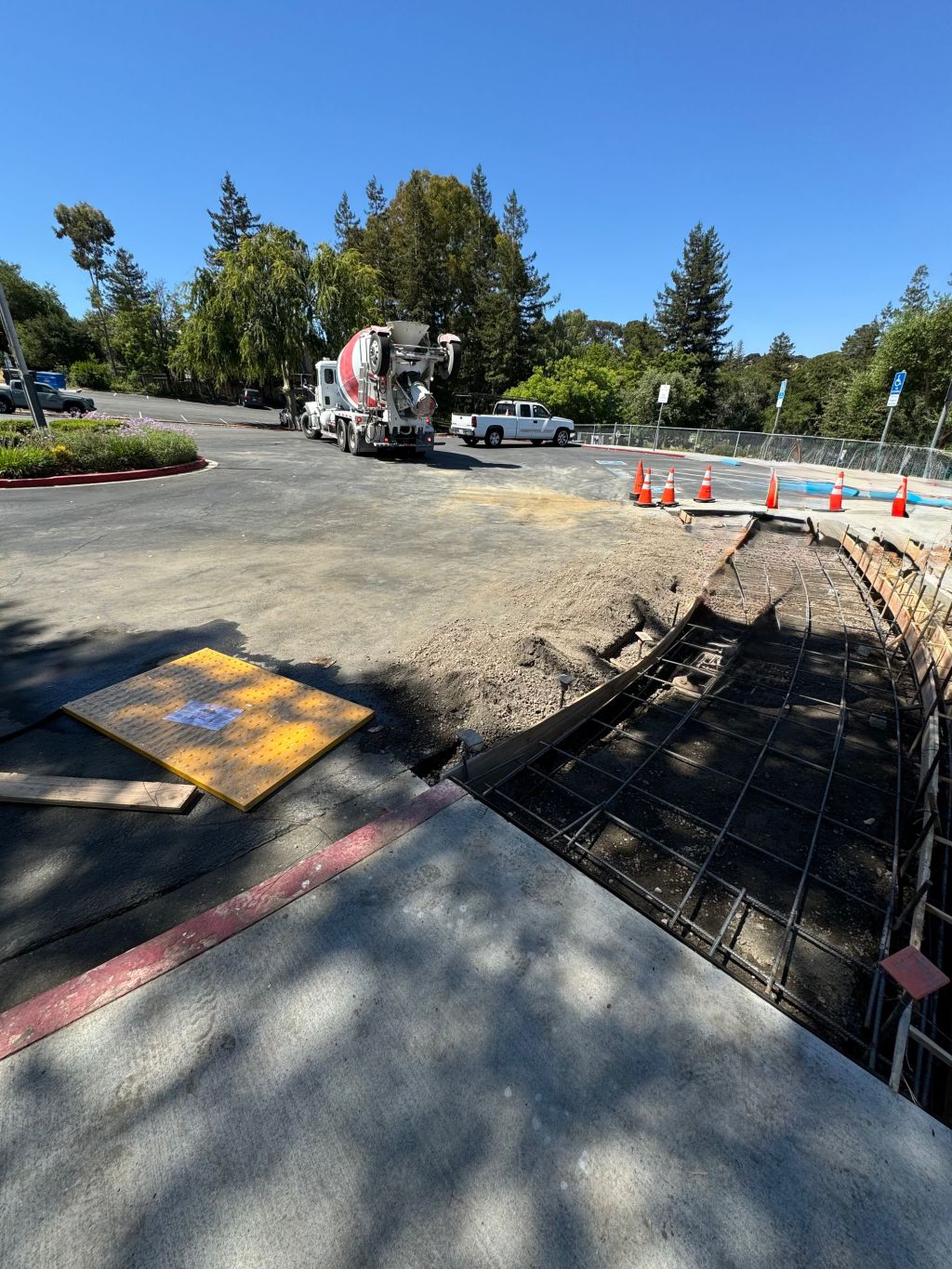
Frequently Asked Questions About Commercial Asphalt Paving Costs
How much does commercial asphalt paving cost in San Leandro, CA, in 2026–2027?
For preliminary planning, commercial asphalt overlays may cost approximately 3.50–7.50 per square foot, while full-depth reconstruction may range from 7–15 or more per square foot. However, these figures are estimates. The final price depends on pavement condition, asphalt thickness, site preparation, drainage, labor, and project specifications.
How much does it cost to pave a 10,000-square-foot commercial parking lot?
Using the illustrative rates in this guide, a 10,000-square-foot overlay could cost approximately 35,000–75,000. Meanwhile, full-depth reconstruction could range from 70,000–150,000. Additional work, such as drainage improvements, striping, concrete repairs, or accessibility upgrades, may increase the total.
Is asphalt cheaper than concrete for commercial paving?
Asphalt often has a lower initial installation cost than concrete in comparable applications. Furthermore, asphalt can be convenient for projects that need phased repairs or future resurfacing. However, concrete may suit certain loading areas or site conditions. Therefore, compare expected service life, maintenance, traffic requirements, and the complete project cost before choosing a material.
How long does commercial asphalt paving take?
The schedule depends on the size of the property, preparation requirements, weather, material delivery, and whether the project involves an overlay or complete reconstruction. In addition, contractors may need to divide the work into phases to maintain access for tenants, customers, employees, or delivery vehicles.
Does commercial asphalt paving include parking lot striping?
Not necessarily. Some proposals include striping and pavement markings, while others list them separately. Therefore, ask for a written breakdown covering parking lines, accessible spaces, directional markings, signage, and other required features.
Can sealcoating reduce long-term paving expenses?
Sealcoating can help protect suitable asphalt against oxidation, weather exposure, and surface wear. However, it does not repair structural failure or replace necessary reconstruction. Consequently, it works best as part of a broader maintenance plan that also addresses cracks and drainage concerns.
How to Budget for Commercial Asphalt Paving in 2026–2027
A well-organized budget should include more than the base paving price. Instead, property owners should evaluate the complete scope, likely maintenance needs, and potential additional expenses.
First, measure the paved area as accurately as possible. Next, identify whether the project involves a new installation, an overlay, milling, localized repairs, or full-depth reconstruction.
Then, request a written proposal that separates the major cost categories. For example, the estimate should explain pavement preparation, asphalt placement, base repairs, drainage work, and finishing items.
Additionally, consider setting aside a contingency for unexpected conditions discovered during construction. This is particularly important when the existing pavement hides damage that cannot be evaluated fully before removal.
The following checklist can help you prepare:
- Confirm the total square footage and project boundaries.
- Identify the type and condition of the existing pavement.
- Determine the expected vehicle and truck traffic.
- Ask whether grading or drainage corrections are required.
- Confirm asphalt thickness and material specifications.
- Review removal, hauling, and disposal costs where applicable.
- Check whether striping, accessibility improvements, and permits are included.
- Compare warranties, project schedules, and maintenance recommendations.
By reviewing these details before signing a contract, you can compare proposals more accurately. Moreover, you can reduce misunderstandings about the work and make decisions based on the actual needs of the property.

Protect Your Investment With Regular Asphalt Maintenance
Commercial asphalt requires ongoing care after installation. Although a new surface may look excellent initially, exposure to sunlight, moisture, traffic, and changing temperatures can gradually affect its condition.
Therefore, a consistent maintenance plan is essential. Inspect the pavement regularly, address cracks before they allow more water intrusion, and monitor areas that experience heavy turning or braking. In addition, keep drainage paths clear so that water does not remain on the pavement.
For suitable asphalt surfaces, professional asphalt driveway sealcoating and surface protection may help preserve the finish and slow oxidation. Although that service page focuses on driveway sealcoating, property owners can discuss the appropriate maintenance treatment for their particular asphalt surface.
Furthermore, Jobco Paving’s maintenance and surface protection services provide a relevant starting point for exploring ongoing pavement care.
Importantly, sealcoating should not be applied indiscriminately. The pavement must be suitable for the treatment, and the contractor should recommend the correct preparation and timing. As a result, maintenance spending can be directed toward protecting the surface rather than covering up deeper problems.
Consider Alternative Paving and Hardscape Solutions
Although asphalt is a popular choice for commercial parking areas, it is not the only option. Depending on the property’s purpose, traffic loads, appearance, and budget, other materials may be appropriate for selected areas.
For example, concrete may be suitable for certain loading zones, walkways, service areas, or locations where specific surface characteristics are needed. You can explore commercial concrete paving solutions when evaluating alternatives for your property.
Meanwhile, decorative or architectural areas may benefit from commercial masonry paving stones or paving stone hardscape installations. Additionally, concrete hardscape services may be relevant for selected outdoor improvements.
For residential properties that need a separate asphalt driveway project, Jobco Paving also provides information about residential asphalt driveway paving.
However, the best surface depends on the specific application. Rather than choosing materials based only on appearance or initial price, evaluate durability, maintenance, accessibility, traffic requirements, and how each surface will connect with the rest of the property.
Why Choose Jobco Paving for Your Commercial Paving Project?
Selecting a paving contractor is an important part of managing a commercial property improvement. In addition to pricing, property owners should consider the clarity of the proposal, the proposed construction method, communication, and the contractor’s ability to explain the project’s requirements.
Jobco Paving offers paving-related services that can help property owners explore asphalt, concrete, hardscape, and maintenance options. Therefore, when preparing a project in San Leandro, CA, it is useful to discuss the existing surface, expected traffic, desired appearance, and available budget before deciding on the scope.
A detailed estimate should identify the recommended paving method and explain why it suits the site. Furthermore, it should distinguish necessary repairs from optional improvements so you can understand where your money will go.
Before proceeding, ask questions about asphalt thickness, base preparation, drainage, traffic management, project phasing, and the timing of any required maintenance. Likewise, confirm which services are included in the proposal and whether any additional work will require written approval.
This approach helps establish clear expectations from the beginning. Consequently, you can make a more informed decision and plan the project around your property’s operational needs.
Get a Commercial Asphalt Paving Estimate in San Leandro, CA
Commercial asphalt paving can represent a substantial investment, but careful planning can help you understand the available options and make the right choice for your property. Whether you need a new parking lot, a resurfacing project, or a more extensive pavement reconstruction, the key is to match the solution to the site’s actual condition.
For the 2026–2027 budget period, use the pricing ranges in this guide as an initial reference rather than a final quote. Then, arrange a site evaluation and request an itemized proposal that accounts for preparation, materials, labor, drainage, striping, and other relevant work.
Ultimately, the best paving project is not simply the one with the lowest initial price. Instead, it is the one that meets your property’s needs, follows appropriate construction practices, and supports reliable performance over time.
Ready to discuss your commercial asphalt paving project in San Leandro, CA? Contact Jobco Paving to explore the available options and request project-specific information. With a clear scope, realistic budget, and suitable maintenance plan, you can move forward with greater confidence and protect the long-term value of your paved property.