When an asphalt driveway, parking lot, or paved surface starts showing cracks, fading, and signs of wear, property owners often face an important question: Is resurfacing cheaper than replacing asphalt? In most cases, asphalt resurfacing costs less than completely removing and replacing an existing pavement. However, the best option depends on the condition of the asphalt, the depth of the damage, drainage performance, and the strength of the underlying foundation.
At Jobco Paving, understanding the difference between resurfacing and replacement can help property owners make smarter paving decisions. After all, choosing the right solution can improve curb appeal, restore a smooth driving surface, and help control long-term maintenance expenses.
Moreover, resurfacing is not always the right choice. Although it can provide excellent results when the existing pavement remains structurally sound, severely damaged asphalt may require a more comprehensive replacement. Therefore, evaluating the condition of your pavement before investing in repairs is essential.
In this guide, we will explain the costs, benefits, limitations, and practical considerations of asphalt resurfacing and replacement. Additionally, we will explore how proper maintenance can extend pavement life and help you choose the most cost-effective solution for your property.
What Is Asphalt Resurfacing?
Asphalt resurfacing is a pavement improvement process in which contractors prepare the existing asphalt surface and install a new layer of asphalt over it. Rather than removing the entire pavement structure, the contractor preserves the usable foundation and renews the upper surface.
Consequently, resurfacing generally requires less demolition, hauling, and reconstruction than a complete asphalt replacement. It can also improve the appearance of a worn driveway or parking area without rebuilding every layer.
However, resurfacing is most effective when the existing asphalt base remains stable. If the foundation has significant structural damage, adding another layer may only conceal the problem temporarily.
For homeowners considering an upgrade, professional residential asphalt driveway paving can help determine whether resurfacing or a new driveway installation is the more appropriate investment.
What Does Asphalt Replacement Involve?
Asphalt replacement is a more extensive process. First, contractors remove the existing asphalt. Next, they inspect the underlying base, correct any necessary structural problems, and prepare the area for new pavement. Finally, they install and compact the replacement asphalt according to the project’s requirements.
Although replacement typically costs more upfront, it may be necessary when the existing pavement has extensive deterioration.
For example, deep potholes, widespread alligator cracking, severe base failure, and persistent drainage problems can indicate that the damage extends below the visible surface. In these situations, resurfacing alone may not deliver a durable result.
Therefore, the right choice depends on more than appearance. Instead, property owners should consider the overall condition of the pavement and the repairs required to achieve reliable performance.

Is Resurfacing Cheaper Than Replacing Asphalt?
Yes, asphalt resurfacing is generally cheaper than complete asphalt replacement when the existing pavement is structurally sound. Because resurfacing preserves much of the existing pavement, it can reduce material removal, disposal, labor, and reconstruction requirements.
Nevertheless, actual costs vary by location, project size, asphalt thickness, site accessibility, drainage conditions, and local material and labor prices. As a result, there is no single price that applies to every driveway or parking lot.
The following table compares the two options.
| Cost and project factor | Asphalt resurfacing | Complete asphalt replacement |
| Initial investment | Generally lower | Generally higher |
| Existing asphalt removal | Usually limited or unnecessary for the main surface | Typically required |
| Construction time | Often shorter | Usually longer |
| Structural repairs | Limited to suitable, stable pavement | Can address deeper pavement and base problems |
| Surface appearance | Creates a renewed, smoother finish | Provides a new pavement surface and allows broader reconstruction |
| Best application | Worn surfaces with a sound foundation | Severely damaged or structurally compromised pavement |
| Long-term value | Strong when the existing base is stable | Strong when extensive repairs or reconstruction are necessary |
Ultimately, the cheapest initial option is not always the most economical over time. For instance, resurfacing a pavement with a failing foundation can lead to recurring cracks and additional expenses. Conversely, replacing an asphalt surface that only needs a new top layer may involve unnecessary demolition and cost.
Therefore, a professional pavement assessment is an important first step.
Why Asphalt Resurfacing Can Save Money
There are several reasons why resurfacing can be a budget-friendly alternative to replacement. However, the savings depend on the condition of the pavement and the scope of the work.
Less Demolition and Disposal
Complete replacement generally involves breaking up and removing the old asphalt. Afterward, contractors must transport or process the removed material. These activities require labor, equipment, and time.
In comparison, resurfacing retains the usable pavement structure. As a result, it can reduce demolition and disposal expenses.
Reduced Construction Time
Because resurfacing usually involves fewer removal and reconstruction steps, the project may be completed more quickly than a full replacement. Consequently, homeowners may regain access to their driveway sooner, while businesses may experience less disruption to parking and traffic.
However, weather, site preparation, curing or cooling requirements, and the size of the project can affect the schedule.
Efficient Use of Existing Materials
When the original pavement base remains stable, preserving it avoids rebuilding components that are still functional. Therefore, resurfacing can focus the investment on the part of the pavement that needs improvement.
Furthermore, asphalt paving materials may be recyclable, depending on the project’s specifications and local facilities. A qualified contractor can explain the available material-management options.
Improved Appearance Without Full Reconstruction
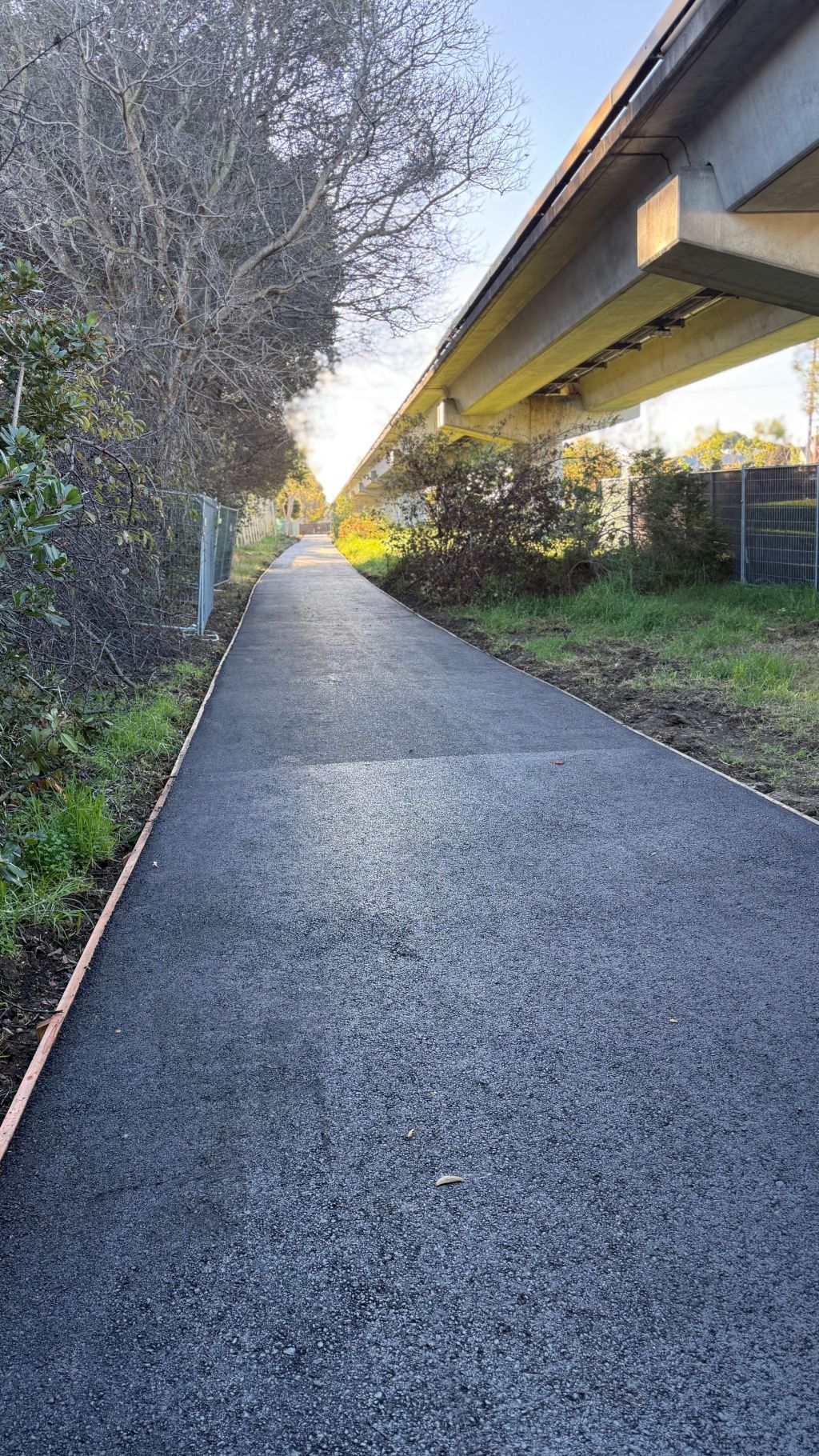
Over time, asphalt can fade, develop surface cracks, and lose its smooth finish. Resurfacing can renew the appearance of a suitable pavement while providing a fresh driving surface.
In addition, combining the project with an appropriate maintenance plan can help protect the investment. Property owners can explore asphalt driveway sealcoating to understand how a suitable protective treatment may help maintain asphalt after the pavement is ready for it.
When Is Asphalt Resurfacing the Best Choice?
Resurfacing can be an excellent solution when the damage is primarily limited to the upper pavement layer. Nevertheless, the contractor should inspect the surface and underlying conditions before recommending this approach.
Resurfacing may be suitable when:
- The asphalt has become faded or weathered.
- Minor surface cracking is present.
- The pavement remains generally level and stable.
- There are no widespread signs of structural failure.
- Drainage works correctly, without persistent water accumulation.
- The existing pavement has enough suitable thickness and integrity for another layer.
For example, a residential driveway may look old because of years of sunlight, traffic, and exposure to changing weather. If the foundation remains sound, resurfacing could restore a more attractive and functional finish without the expense of complete reconstruction.
Similarly, a commercial parking area with surface-level deterioration may benefit from resurfacing if an inspection confirms that the underlying pavement can support the new layer.
However, resurfacing should not be used simply to hide serious problems. Otherwise, existing defects may reappear through the new surface.
When Should You Replace Asphalt Instead?
Although resurfacing is often less expensive, replacement can be the better long-term investment when the pavement has deeper problems.
Consider complete replacement or substantial reconstruction if the asphalt shows the following warning signs:
- Extensive alligator cracking: Interconnected cracks that resemble reptile scales can indicate structural weakness or base failure.
- Deep potholes: Repeated potholes may point to deterioration below the surface.
- Significant sinking or rutting: Depressions and wheel-path grooves can result from structural problems, inadequate support, or other underlying issues.
- Persistent drainage problems: Standing water may accelerate deterioration and damage the pavement structure.
- Widespread crumbling: Severe edge breakdown or extensive disintegration may indicate that localized repairs are no longer sufficient.
- Repeated repair failures: If the same areas continue to deteriorate after repairs, the underlying cause may need more comprehensive treatment.
Nevertheless, not every crack or pothole requires complete replacement. A qualified paving contractor can assess whether localized repairs, resurfacing, partial-depth reconstruction, or full replacement offers the best value.
Consequently, a proper evaluation can prevent both unnecessary spending and ineffective repairs.
How Much Can You Save by Resurfacing?
The potential savings depend on the project’s size and condition. Generally, resurfacing costs less because it reduces the amount of pavement that must be removed and reconstructed.
For a simple illustration, consider a hypothetical project in which resurfacing costs $4 per square foot and complete replacement costs $8 per square foot. These figures are examples only, not current market quotes or Jobco Paving prices.
| Hypothetical project size | Resurfacing at $4/sq. ft. | Replacement at $8/sq. ft. | Illustrative difference |
| 500 sq. ft. | $2,000 | $4,000 | $2,000 |
| 1,000 sq. ft. | $4,000 | $8,000 | $4,000 |
| 2,000 sq. ft. | $8,000 | $16,000 | $8,000 |
These examples show how the cost difference could increase as the project becomes larger. However, real estimates can differ considerably. For instance, extensive base repairs, excavation, drainage improvements, edge work, or difficult site access may increase the total cost.
Moreover, a contractor may recommend different approaches for different sections of the same property. Therefore, requesting an inspection and itemized estimate is more useful than relying on a general price comparison.
What Factors Affect Asphalt Resurfacing Costs?
Even when resurfacing is appropriate, several factors influence the final price.
Size of the Paved Area
Larger projects require more asphalt and additional labor. However, the cost per square foot may vary depending on the project size, equipment requirements, and mobilization expenses.
Existing Pavement Condition
A relatively stable surface may require limited preparation. Conversely, extensive cracking, loose material, depressions, or localized failures may require repairs before the new asphalt layer is installed.
Asphalt Thickness
The appropriate overlay thickness depends on the pavement’s existing condition, expected traffic, engineering requirements, and project specifications. Therefore, the contractor should determine the suitable thickness rather than applying the same specification to every surface.
Drainage and Grading
Water is one of the major threats to pavement durability. If the surface directs water toward buildings or allows it to collect in low spots, grading or drainage improvements may be necessary.
Consequently, correcting these problems can increase the initial project cost while helping prevent future deterioration.
Traffic and Intended Use
A residential driveway does not necessarily require the same design as a commercial parking area exposed to frequent vehicle movements or heavier loads.
For commercial properties, the contractor should consider traffic patterns, turning areas, loading requirements, and the expected demands placed on the pavement.
Can Sealcoating Replace Asphalt Resurfacing?
No. Although sealcoating and resurfacing can both improve asphalt maintenance, they serve different purposes.
Sealcoating applies a protective coating to a suitable asphalt surface. It can help reduce exposure to sunlight, moisture, and certain surface contaminants. However, it does not add a new structural asphalt layer or repair significant pavement failures.
Resurfacing, on the other hand, installs a new layer of asphalt over an appropriate existing surface. Therefore, it can renew the driving surface more substantially.
The following comparison explains the difference.
| Feature | Sealcoating | Resurfacing |
| Primary purpose | Surface protection and maintenance | Renewal of a worn asphalt surface |
| Adds a new asphalt layer | No | Yes |
| Corrects deep structural problems | No | No, not by itself |
| Typical application | Suitable asphalt needing protective maintenance | Worn asphalt with a stable foundation |
| Relative project scope | Usually smaller | Usually more extensive |
For this reason, choosing between sealcoating and resurfacing depends on the actual problem. If the asphalt is structurally sound but needs routine protection, sealcoating may be appropriate. However, if the surface has deteriorated beyond what a protective coating can address, resurfacing or another repair method may be more suitable.
For more information about ongoing pavement care, explore Jobco Paving’s maintenance and surface protection services.
How to Extend the Life of Resurfaced Asphalt
Once resurfacing is complete, proper maintenance can help preserve the new surface. Although no pavement lasts forever, consistent care can reduce avoidable damage and help property owners identify problems earlier.
Keep Drainage Working Properly
First, make sure water can drain away from the pavement. Clear debris from drainage channels and address areas where water regularly collects. Otherwise, moisture may contribute to cracks, weakening, and surface deterioration.
Address Cracks Promptly
Small cracks can allow water to enter the pavement structure. Therefore, have them evaluated and repaired using an appropriate method before they become larger problems.
Nevertheless, crack sealing is not a substitute for structural repairs when the underlying pavement has failed.
Avoid Unnecessary Heavy Loads
Where possible, prevent vehicles from exceeding the pavement’s intended load capacity. In addition, avoid repeatedly concentrating heavy loads in areas that were not designed to support them.
Follow the Contractor’s Instructions
After resurfacing, follow the contractor’s recommendations for when vehicles can return to the pavement. Temperature, asphalt mix, layer thickness, and weather conditions can affect the appropriate waiting period.
Similarly, follow the recommended maintenance schedule instead of applying sealcoating or other treatments too early.
Inspect the Pavement Regularly
Finally, examine the asphalt periodically for new cracks, potholes, depressions, or drainage changes. Early intervention may help prevent a small defect from becoming an expensive repair.
Asphalt Paving for Commercial and Residential Properties
Both residential and commercial property owners can benefit from selecting the right paving solution. However, their needs may differ significantly.
For homeowners, a smooth driveway can improve curb appeal, support convenient access, and create a more finished appearance. If a driveway requires broader improvements, residential asphalt driveway paving can help property owners explore suitable paving options.
Meanwhile, businesses must consider customer access, employee parking, vehicle circulation, safety, and operational disruption. Therefore, a commercial paving project should account for the way the property is used every day.
In some cases, asphalt is not the only suitable surface material. For example, properties with particular design, durability, or appearance requirements may also consider commercial concrete paving.
Additionally, hardscape elements can contribute to the appearance and usability of outdoor spaces. Depending on the property’s needs, concrete hardscape solutions or paving stone hardscape designs may be worth exploring for suitable walkways, patios, borders, or other landscaped areas.
For projects involving decorative or functional paved features, commercial masonry paving stones may also be relevant.
However, every material has different installation requirements, maintenance needs, and performance characteristics. Consequently, the best choice should reflect the property’s purpose, budget, traffic, drainage, and design goals.
Why Choose Jobco Paving for Your Asphalt Project?
Selecting a paving contractor is an important part of protecting your investment. Although price matters, the cheapest quote may not deliver the best long-term value if it overlooks preparation, drainage, or structural issues.
Jobco Paving can be a starting point for property owners evaluating paving and maintenance options. Before proceeding, ask the contractor to explain the pavement’s condition, the recommended repair method, the expected project scope, and any factors that could affect the estimate.
In addition, consider asking the following questions:
- Is resurfacing suitable for the current condition of my asphalt?
- Does the existing pavement need localized repairs first?
- Are there drainage or base problems that should be corrected?
- What asphalt thickness and preparation are proposed?
- What is included in the written estimate?
- When can the pavement safely reopen to vehicles?
- What maintenance will help protect the finished surface?
By reviewing these details, you can compare proposals more accurately and understand what you are paying for. Ultimately, an informed decision can help you balance immediate costs with long-term pavement performance.
Frequently Asked Questions About Asphalt Resurfacing and Replacement
Is resurfacing always cheaper than replacing asphalt?
Resurfacing is generally less expensive when the existing pavement is structurally sound. However, extensive preparation or hidden damage can reduce the savings. Therefore, an inspection is necessary to determine the most cost-effective option.
How long does asphalt resurfacing last?
The lifespan varies according to pavement condition, installation quality, traffic, climate, drainage, and maintenance. A properly installed overlay on a stable foundation can provide years of service, but no specific lifespan can be guaranteed without considering the project conditions.
Can you resurface asphalt that has potholes?
Possibly, but the potholes should be evaluated and properly repaired before resurfacing. If they result from significant base failure or widespread structural deterioration, a more extensive repair or replacement may be necessary.
Does resurfacing fix cracks permanently?
No. Resurfacing can cover suitable surface defects, but it does not eliminate every underlying cause of cracking. If movement, drainage problems, or structural failure remain, cracks may eventually return.
Is asphalt resurfacing suitable for a commercial parking lot?
Yes, resurfacing can be suitable for a commercial parking lot when the existing pavement and base are in acceptable condition. Nevertheless, high traffic, heavy vehicles, drainage concerns, and extensive deterioration may require additional repairs or replacement.
Is sealcoating cheaper than resurfacing?
Sealcoating is generally less expensive because it applies a protective coating rather than a new asphalt layer. However, it cannot replace resurfacing when the pavement needs substantial surface renewal.
How do I know whether my driveway needs resurfacing or replacement?
Look for signs such as widespread cracking, potholes, sinking, rutting, and standing water. Then arrange a professional assessment. A contractor can determine whether the damage is superficial or extends into the pavement foundation.
Can resurfacing improve my property’s curb appeal?
Yes. A fresh asphalt layer can create a smoother, more uniform appearance when the underlying pavement is suitable. Additionally, maintaining clean edges and proper drainage can help the completed project look better and perform more reliably.
Should I repair drainage problems before resurfacing?
Yes, drainage problems should be evaluated before resurfacing. Otherwise, water may continue to damage the pavement or cause defects to return. Addressing the underlying cause can help protect the investment.
How can I request an asphalt paving estimate from Jobco Paving?
Start by describing the property’s location, the approximate paved area, and the visible pavement problems. Then request an assessment and written estimate that explains the recommended work, preparation requirements, and expected costs. You can contact the company through its paving and project inquiry page to explore the next steps.

Contact Jobco Paving for Your Asphalt Paving Needs
So, is resurfacing cheaper than replacing asphalt? In many cases, yes. Resurfacing can be a practical and cost-effective solution when the existing pavement has a stable foundation and the damage is mainly limited to the surface. Nevertheless, complete replacement may offer better long-term value when the asphalt has extensive structural deterioration.
Therefore, the smartest approach is to evaluate the condition of your pavement before committing to either option. By identifying the cause of the damage, comparing suitable repair methods, and planning for ongoing maintenance, you can make a more confident decision.
Whether you are improving a residential driveway, maintaining a commercial parking area, or exploring other paving solutions, Jobco Paving can be a resource as you plan your project.
Ready to explore your asphalt paving options? Visit Jobco Paving’s website to learn more about residential paving services, or review maintenance and surface protection solutions as you consider the next step. With the right assessment and a suitable paving plan, you can work toward a smoother surface, improved appearance, and better long-term value.